

Education, Leadership, and Women’s Rights: Mosaic and Girton College Deepen Collaboration.
Event Report: “Afghanistan’s Future Prospects in a Changing Region” with Fawzia Koofi
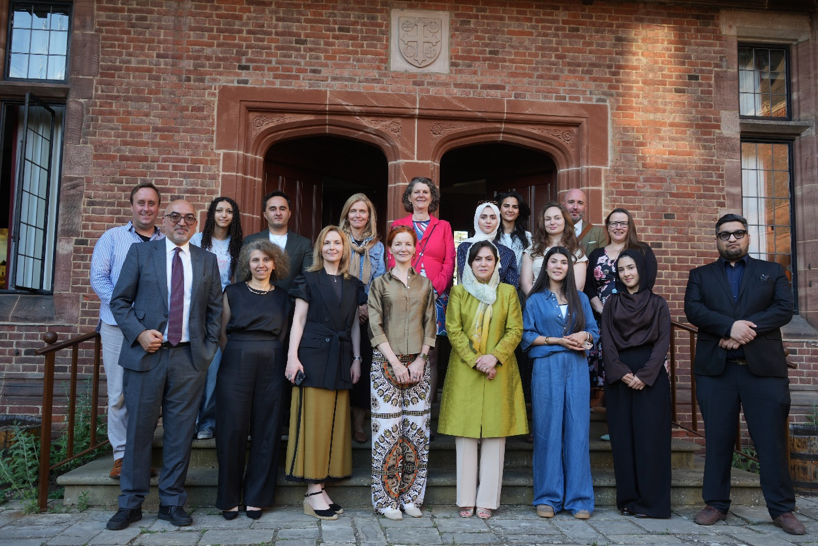
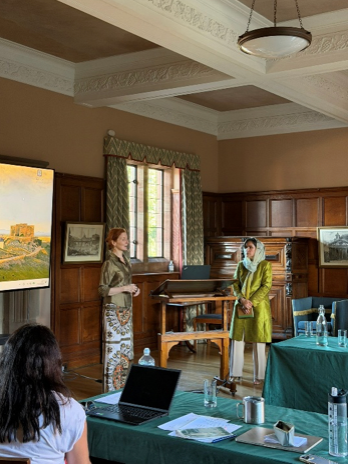
On a warm and engaging evening at Girton College, Cambridge, Mosaic Foundation and Girton welcomed Fawzia Koofi—Afghanistan’s renowned woman politician, former parliamentarian, women’s rights advocate, and peace negotiator—for a timely discussion on Afghanistan’s future, the role of education, and the leadership of women in shaping peaceful societies.
The event formed part of an emerging collaboration between Mosaic and Girton exploring the relationship between education, leadership, peacebuilding, and social resilience. It also contributed to ongoing consultations on a joint international conference next year, while offering a moment to reflect on Girton’s pioneering legacy as one of the world’s first residential colleges for women.
A Voice for Afghanistan’s Women
Fawzia Koofi is one of Afghanistan’s most recognisable political figures. A former Deputy Speaker of Parliament and a member of the Republic’s negotiating team during the Doha peace talks, she has spent decades advocating for women’s rights, education, and political participation. Having survived multiple assassination attempts and continuing her work in exile, she remains a leading voice for Afghanistan’s women, girls, and wider society.
Drawing on her personal experiences and the country’s recent history, Koofi offered a candid assessment of Afghanistan’s current challenges. While global attention often focuses on the restrictions imposed on women and girls, she urged the audience to consider the deeper historical and cultural forces that have shaped Afghanistan’s educational and political landscape.

Education and the Legacy of Conflict
A central theme of the evening was the long-term impact of conflict on Afghanistan’s education system. Koofi noted that during the Cold War, educational materials were deliberately infused with the language and imagery of jihad, embedding militarised narratives into school curricula. The consequences of this approach, she argued, continue to shape attitudes and institutions today.
Her reflections underscored a point Mosaic has consistently emphasised: education is never neutral. The values taught in classrooms shape generations, influence national identity, and determine whether societies move toward cooperation or conflict.
Rebuilding education in Afghanistan therefore requires more than reopening schools—it demands rethinking the content and purpose of learning itself.
As Mosaic’s Founder has written, “While we rightly demand the reopening of schools for girls, we must also ask: what kind of education will these girls receive? A school reopened only to impose indoctrination is not liberation. It is the consolidation of authoritarian control.”
Women, Power, and Social Change
Koofi also reflected on the persistent barriers faced by women in Afghanistan and beyond. She described how women have often become casualties of broader political struggles, constrained by entrenched forms of machismo and paternal power. Yet her message was ultimately one of resilience. Across Afghanistan’s modern history, women have continued to seek education, build businesses, serve their communities, and push for change despite extraordinary obstacles.
Their determination, she argued, demonstrates the transformative power of opportunity and the centrality of women’s leadership to any sustainable peace.
Girton’s Enduring Legacy
The evening concluded with reflections from Dr Elisabeth Kendall, Mistress of Girton College, who highlighted the enduring relevance of Girton’s founding principle: that women deserve equal access to education. More than 150 years later, this commitment remains vital. Education, she noted, strengthens societies, encourages critical thinking, promotes tolerance, and equips communities to address complex global challenges—from inequality to climate change.
Looking Ahead
The discussion with Fawzia Koofi was a powerful reminder that the struggle for educational opportunity remains one of the defining issues of our time. Mosaic extends its sincere thanks to Fawzia Koofi, Dr Kendall, and the Fellows, staff, and students of Girton College for their hospitality and partnership.
This event marks an important step in what we hope will become a long-term collaboration exploring how education and leadership can help shape a more peaceful, inclusive, and resilient future. The collaboration between Mosaic and Girton strengthens the former’s education and human rights, including women’s rights, programmes.


Comments